Join us in Montréal (and online)!
If you are attending Goldschmidt 2026 in Montréal (or even if you’re not…), consider signing up to our full‑day workshop dedicated to advancing the science and practice of volcanic gas measurements and modelling. It is free and running both in-person in Montréal and virtually! You do not need to register for the Goldschmidt conference to attend.
We have space for 50 in-person participants so first in, first served! If you’re not in Montréal or we’ve reached our in-person limit, you can join us online.
The workshop will begin with an overview of natural volcanic degassing processes and the current state of in situ and satellite‑based monitoring techniques. A series of structured presentations will provide insights into case studies from natural volcanic systems. Topics will include gas measurements during monitoring, experimental approaches (including melt and fluid inclusion analyses), sulfur partitioning, Raman‑based SO₂/CO₂ speciation, and current challenges in calibrating and applying numerical models.
Participants will also engage in guided group exercises run through VICTOR designed to reproduce benchmarking results, compare methodological approaches, and identify priorities for improving data quality and model performance. Outcomes from these activities will contribute to an updated Workshop White Paper, helping to shape collective standards and future directions.
All researchers, students, and professionals engaged in volcanic gas studies are encouraged to attend this collaborative event.
When
Sunday 12th July 2026
9:00 am – 4:30 pm EST
Where
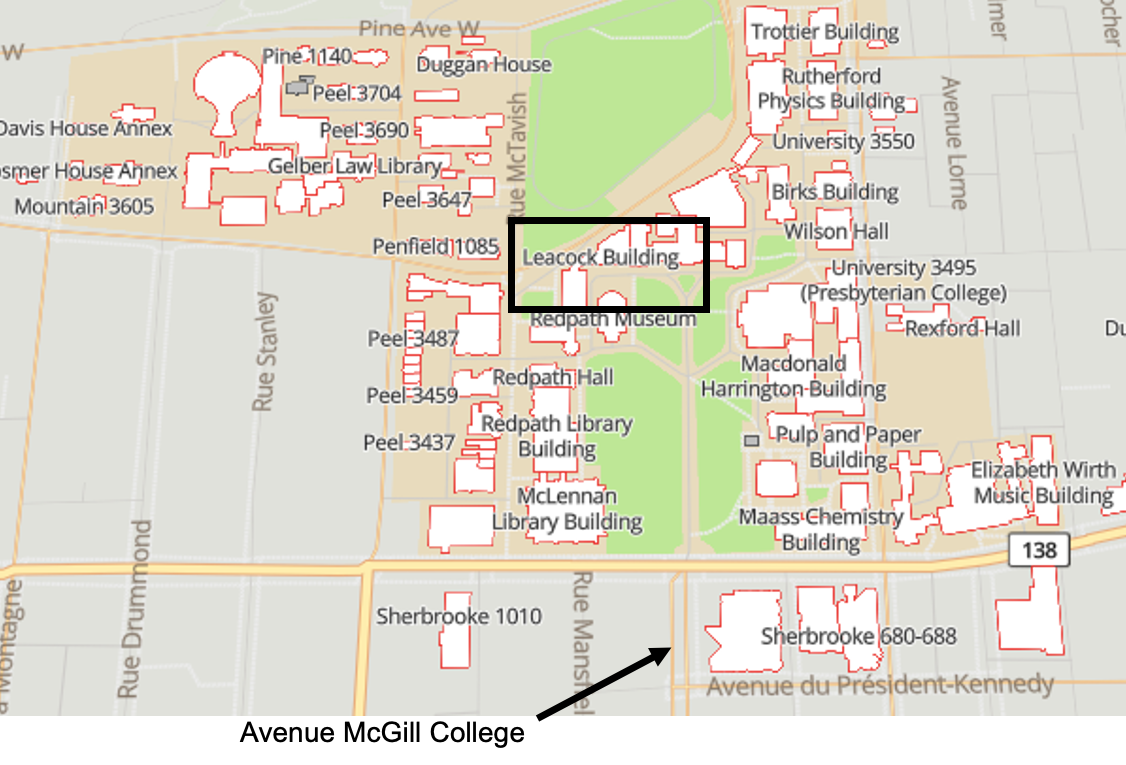
McGill University
Leacock Building, Montréal
View map
Format
Hybrid
In-person & online
Things to Know
In-person attendees:
- We will be providing tea, coffee, snacks, and lunch and if you told us about dietary requirements, these have been catered for.
- Please bring your laptops to run the calculations live during the workshop (and please bring them fully charged).
- Information about wifi at McGill
Virtual attendees:
- We understand that the timezone isn't kind to all of you - if you only join for certain parts, that is totally fine!
Coding Exercises — *Action Required*
We will be running some exercises (e.g., calculating pressures and vapor compositions, degassing calculations) during the workshop through the VICTOR computational platform. This does not require downloading any software onto your computer but it does require signing up to VICTOR.
- VICTOR sign-up form (if you have signed up before, you can't sign up again - please do this asap to check everything is workshop)
- Please consider watching the ~8 minutes Intro To VICTOR videos (in English and Spanish) on YouTube to have some familiarity with the platform!
Register for VICTOR
The exercises can also be run locally, and we have provided an environment file that will automagically create a conda virtual environment that contains all necessary Python packages pinned to the versions used to create these exercises. That's all on the github here: https://github.com/eryhughes/workshop_volatiles_goldschmidt2026
Overview
Volatiles are a critical component of magmas, driving volcanic eruptions, creating and modifying planetary atmospheres, and generating ore deposits. Over the last few decades, there has been an immense amount of work quantifying the solubility of individual volatile species in a wide variety of magma compositions and the creation of various modelling capabilities to look at melt-vapor chemical equilibria of C-H-S-N-Cl-bearing magmas (e.g., pressure of vapour-saturation and degassing calculations). At IAVCEI2023, the first "Modelling volatile behaviour in magmas" workshop brought together experimentalists, numerical modellers, and observational researchers with an interest in volatile solubility in magmas to explore the current landscape and look for future directions. At Goldschmidt2026 we will host a follow-on workshop, supported by a Catalyst: Seeding grant from the Royal Society Te Apārangi (Aotearoa New Zealand).
There is wide variety of tools currently available to the community for modelling melt-vapor chemical equilibria, such as VESIcal, D-Compress, Sulfur_X, MAGEC, EVo, CHOSETTO, MELTS+DEW, and VolFe. This workshop will showcase some of these currently available tools with the opportunity to learn how to run calculations and compare calculation outputs. We will also present a benchmarking exercise, where different melt-vapor chemical equilibria tools have run the same degassing calculations, and explore the different behaviour of the tools (e.g., depth of sulfur degassing, changes in oxygen fugacity during ascent, melt and vapor composition, etc.). We will have discussions on future directions, outlining the progress on "what are the experimental and modelling gaps?", "what do observational researchers need these codes to do?", and "can we link monitoring needs to solubility outputs?" and discussing new topics to support future work to improve these tools.
Whether you're just getting started with modelling the behaviour of volatiles in magmas, or have used a variety of these tools in your own work, we are excited to see you at our workshop!
Schedule
All times in US Eastern time (Montréal)
9:00
Pre-workshop Tea and Coffee
Check in and network with fellow attendees.
9:30
Opening Remarks
Welcoming remarks and a brief review of our last workshop.
Morning Session
9:40–12:20
9:40
Melt and fluid inclusions
Penny Wieser (UC Berkeley) and Shuo 'Echo' Ding (University of Florida). These invaluable keepers of the rock record. 30 min.
10:10
Introduction to the VICTOR computational platform
Einat Lev & Sam Krasnoff (Lamont-Doherty Earth Observatory). Building a community resource for hosting, archiving, running, and intercomparing volcanic process model codes. We will be using VICTOR to run our modeling exercises. 20 min.
10:30
Exercise 1: Calculating pressures and fluid compositions
30 min.
11:00
Coffee Break
Discussion prompt: caffeine solubility and degassing in low-solute aqueous fluids. 20 min.
11:20
Volcanic gases
Ery Hughes (University College London). Active volcanic degassing literally unearths the records of magmatic volatiles sourced throughout a vertically extensive magma plumbing system. 30 min.
11:50
Exercise 2: Degassing
30 min.
Lunch 12:20–13:20
Catered lunch on site. 60 min.
Afternoon Session
13:20–16:30
13:20
Hydrothermal systems
Andri Stefansson (University of Iceland). Volcanic degassing: more than just a pretty plume. 30 min.
13:50
Experiments and model calibration
Shashank Prabha-Mohan (Université Clermont Auvergne). Where do models come from, anyways? Tales from your local university basement. 30 min.
14:20
Chlorine and halogens in volcanic systems
Monika Rusiecka (University of Oxford). The addition of the lesser studied by critically important magmatic volatiles. 30 min.
14:50
Coffee Break
Discussion prompt: the most underrated volcano. 20 min.
15:10
Model comparison
Kayla Iacovino (SETI Institute). We tested five H-O-C-S solubility and degassing codes (plus some H-O-C-only ones). What we found will shock you (please like and subscribe). Kayla will present what we have been working on since our last workshop three years ago: what we found, why it took us so long, and the new Python wrapper volcatenate. 35 min.
15:45
Quick Coffee Break
Discussion prompt: "do you have oat milk?"
15:50
Wrap up and future steps
Let's set some real acheivable goals and report back at our next workshop. 30 min.
Adjourn 16:30
The workshop will end at 4:30 PM in time to attend the Goldschmidt Icebreaker at the Montréal Convention Centre at 5:00 PM. A discussion prompt for the icebreaker: champagne bottles as an experimental magma chamber analogue for the solubility of CO2 in aqueous solution. Bonus: the potential for calculating the Gibbs free energy of degassing from the velocity and trajectory of a cork during champagne fragmentation.
We hope this workshop will have inspired a lot of discussion and created exciting new collaborations. We will be sending out a questionaire to participants after Goldschmidt to gather feedback on the workshop and on what the participants took away from it. For those interested in working with the organizers on a post-conference white paper (similar to this one), please get in touch!